Brooklyn Heights
The endgame for Brooklyn real estate — and in 2026, more reachable than it's ever been.
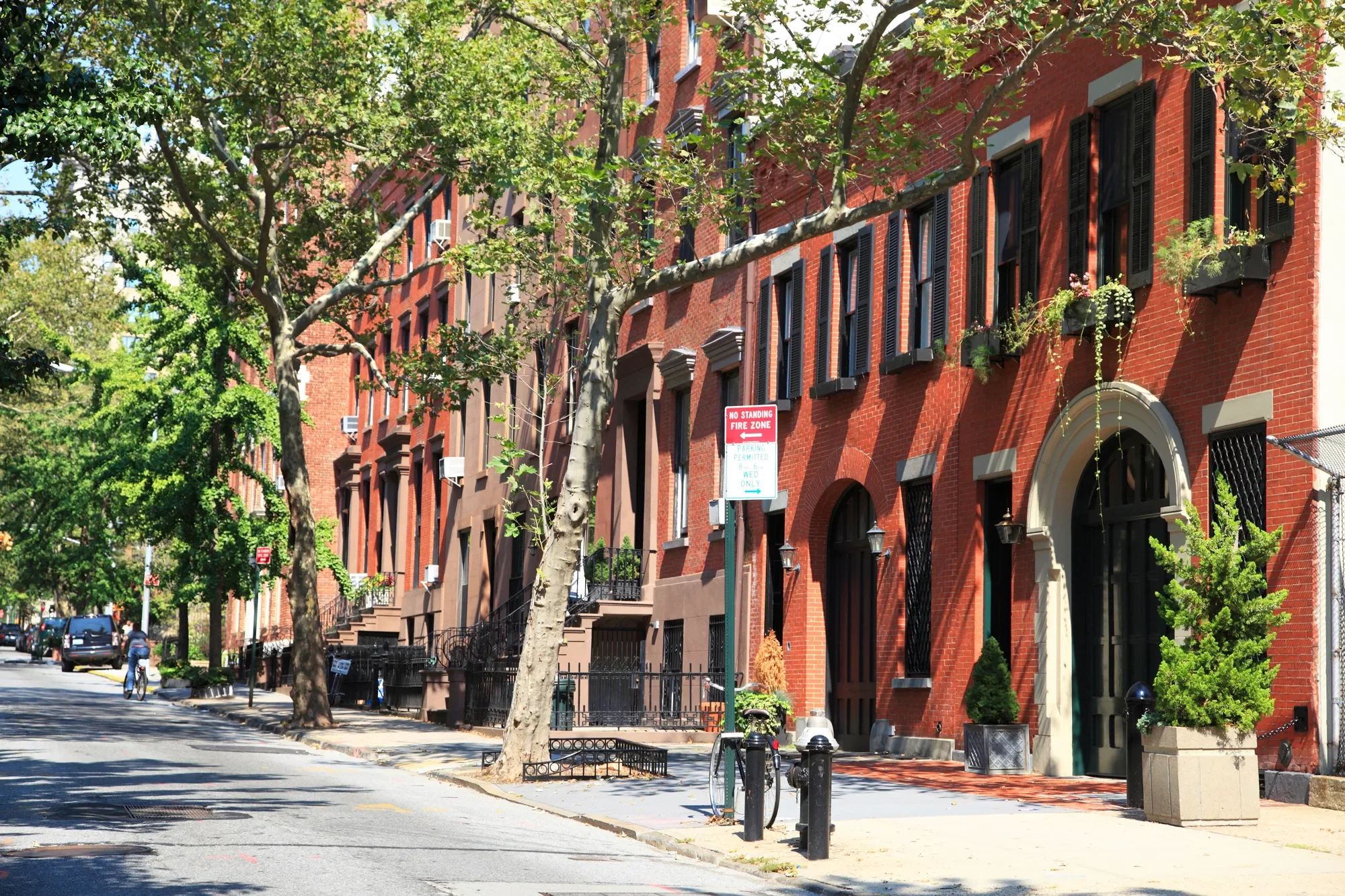

The Market Right Now
Brooklyn Heights in 2026 is operating exactly as it always has — on its own terms, at its own price point, and with a patience that other Brooklyn neighborhoods can't afford. The price per square foot here runs $1,600 and above, the highest in the borough, and the 11201 zip code still carries a weight in certain buyer conversations that no amount of Carroll Gardens charm or Williamsburg cool has fully matched.
What's changed in 2026 is the structure of the market itself. It's become bimodal in a way that's important to understand before you start looking. On one end you have the legacy co-ops on Pierrepont and Remsen — pre-war buildings with deep history, stringent boards, and buyers who understand exactly what they're getting into. On the other end you have the glass waterfront towers like Quay Tower, where the amenities and views command their own premium. The middle — the renovated two-bedroom condo at a digestible price point — has effectively disappeared. If that's what you're looking for, you need to know that going in.
The gap between Brooklyn Heights and Cobble Hill pricing has narrowed in 2026, and a Carroll Gardens townhouse can hit a higher absolute number based on lot size. But the stature premium of the Heights — the zip code, the historic district designation, the institutional weight of the neighborhood — remains a real and priced quantity for the buyer who cares about it.
The Watchtower Fringe: The North Heights Play

Everyone arrives in Brooklyn Heights wanting the Fruit Streets — Pineapple, Orange, Cranberry. They're beautiful and the demand reflects it. But the smart 2026 move is the North Heights, specifically the area around the former Watchtower complex on Columbia Heights.
The CIM Group's conversion of 25 to 30 Columbia Heights is bringing nearly 700 new units to market — the largest single injection of residential inventory the neighborhood has seen in a century. This corner of the Heights is transitioning from sleepy to high-end residential hub, and it connects directly to DUMBO below. For buyers who want Brooklyn Heights access and address without competing on the Fruit Streets, this pocket is where the opportunity is right now while it's still being discovered.


The Co-op Shift: 2026 Changes Everything
For decades Brooklyn Heights co-op boards were effectively the great wall of Brooklyn real estate. Demanding post-closing liquidity requirements, strict debt-to-income ratios, and — most frustratingly — no obligation to communicate with applicants on any timeline. Buyers with clean financials would submit packages and wait months without a word.
That dynamic has shifted materially in 2026. New co-op application timeline regulations going into full effect this year mean boards can no longer leave buyers in extended silence. The liquidity and financial requirements remain serious — expect boards to want two years of post-closing liquidity and DTI ratios around 25% — but the process now has structure and accountability that it never had before.
The result is a roughly 10% uptick in co-op transactions. The "board fear factor" that kept qualified buyers away from the Heights for years has been replaced by a regulated process. If your financials are clean, 2026 is genuinely the most accessible the Heights co-op market has ever been. That's not a small thing and it's not widely understood yet.
The Promenade and the BQE: What You Actually Need to Know
The BQE Central project and its proposed triple cantilever solution remain the neighborhood's ongoing anxiety in 2026. The city is moving through environmental review and the timeline is long. What's notable is that it hasn't materially affected pricing on Columbia Heights — and the reason is the Brooklyn Heights Association. Buyers here trust that the neighborhood's political organization and preservation infrastructure will never allow a highway to be built over the Promenade. That institutional confidence is priced into the market as a feature, not ignored as a risk.
One practical note if you're looking at Columbia Heights specifically: the sound profile on higher floors facing the BQE is counterintuitively worse than the garden levels. It's one of those details that matters and that most agents either don't know or don't mention.
Who's Moving Here
Brooklyn Heights draws buyers who have made a deliberate decision. They've looked at the borough, understood their options, and chosen the neighborhood that offers the most institutional stability, the strongest historic district protections, and the most direct Manhattan access in Brooklyn. This is rarely someone's first neighborhood — it's usually where people land after years of living in Brooklyn and deciding they're done moving.
The neighborhood also draws people for whom the commute is genuinely non-negotiable. Brooklyn Heights has two distinct commuter profiles and the three blocks between them matter more than most people realize.
Ground-Level Intel
The 2/3 vs. 4/5 Decision — this is the transit conversation I have with every buyer before they decide which blocks to focus on. If you work on the West Side of Manhattan, you want to be near the Clark Street 2/3 stop. If you're headed to Wall Street or the East Side, staying south of Pierrepont puts you close to the Borough Hall 4/5. That difference is three blocks on a map and fifteen minutes in February when the wind is coming off the harbor. Know which train you need before you decide where to look.
The Squibb Bridge — if you're looking at the North Heights, Brooklyn Bridge Park is effectively your backyard via the Squibb Bridge. It bypasses the tourist congestion on Old Fulton Street entirely and puts you in the park in under three minutes. For anyone prioritizing outdoor access this changes how the North Heights feels relative to the rest of the neighborhood.
Garden Place — one of the few blocks in the Heights where owners collectively maintained a specific architectural harmony over decades. It reads like a London mews, it photographs beautifully, and the curb appeal standard on that block is self-enforcing in a way that's unique even for Brooklyn Heights. Worth walking before you decide how you feel about the neighborhood.
Inga's Bar — has replaced the old-school spots as the neighborhood's social clubhouse. If you want to understand the current energy of Brooklyn Heights rather than its reputation, spend an evening there.
The Co-op Package Reality — even with the new timeline regulations, a Heights co-op application is a serious undertaking. Start assembling your financial package before you find the apartment you want, not after. Two years of tax returns, post-closing liquidity documentation, reference letters — having this ready in advance is the difference between being a competitive applicant and losing a unit while you're still gathering paperwork.


What I'm Seeing on the Ground
Brooklyn Heights rewards preparation more than almost any market I work in. The co-op process, the limited inventory, the competitive waterfront tier — none of it is forgiving of buyers who aren't ready to move when something right surfaces. The conversation I want to have with you isn't about what's available right now. It's about getting you positioned so that when the right unit comes up — and it will — you're already ready.
Thinking about Brooklyn Heights? Let's talk.
I know this neighborhood and I'll give you a straight read on whether it fits what you're looking for — no pitch, no pressure.