Carroll Gardens
Brooklyn's fortress of stability — and its most fiercely held real estate.

The Market Right Now
If there's one word that defines the Carroll Gardens market in 2026 it's hold. This is a neighborhood built on the culture of the owner-occupant, and that culture shapes everything about how real estate moves here. Families don't sell — they renovate, they consolidate, they pass homes to the next generation. The market doesn't behave like the rest of Brooklyn because the people in it aren't playing the same game.
The dominant story in 2026 is what I'd call the Multigenerational Gut. Adult children are moving back into the top floor of their parents' three-family brownstones — with $500,000 renovation budgets. This is keeping inventory off the market while simultaneously driving up the value of everything around it.
For buyers, inventory on the prime Place blocks — First through Fourth — is effectively extinct. When a house does hit the market it's almost always an estate sale that hasn't traded since the 1970s. You're paying a stability premium that has nothing to do with condition. In early 2026 a 20-foot-wide brownstone with a deep garden is trading at $3.5M to $4.2M even when it needs a full overhaul. That number reflects what the block is, not what the building currently is.
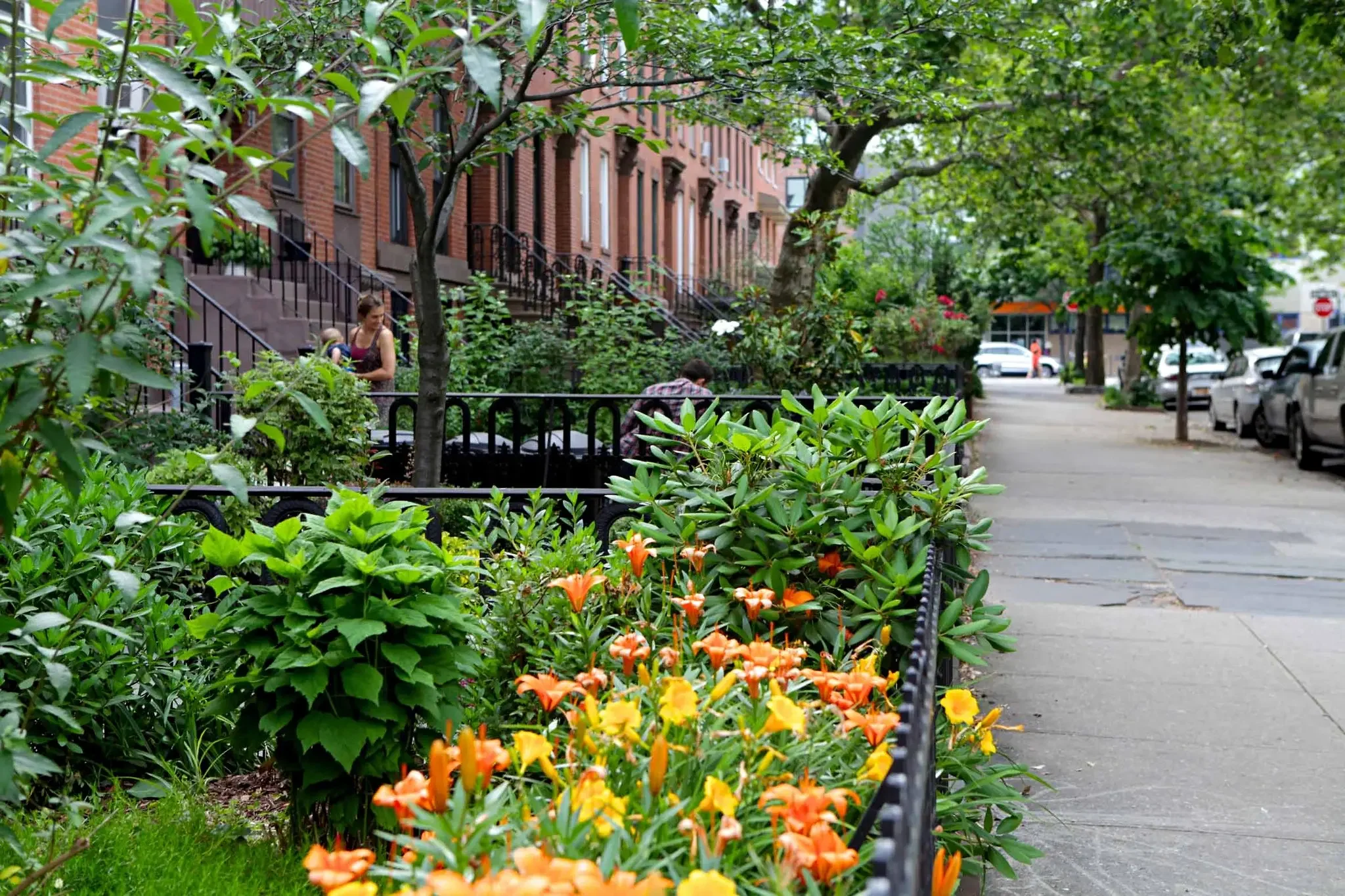
The garden apartment dynamic deserves its own conversation. Unlike the below-grade units in other neighborhoods, Carroll Gardens garden levels open directly into those legendary 40-foot front yards. These are no longer starter rentals — they're being positioned and priced as luxury garden suites at $5,000 and above. If you're a renter who's been dismissing garden apartments based on experience elsewhere in Brooklyn, Carroll Gardens is a different category entirely.
The Gowanus Fringe: The 2026 Value Play

The move that most buyers are missing is the Bond Street corridor along the Gowanus border. What used to be the industrial edge of Carroll Gardens has quietly become the gallery edge, and as the Gowanus rezoning enters its final phase the blocks between Smith and Bond are benefiting from both neighborhoods' momentum simultaneously.
The specific play: look at the smaller, more architecturally unusual streets like Dennett Place. The "tiny houses" with their distinctive mini-basement doors are seeing significant value appreciation as buyers seek out architectural character over standard four-story layouts. This pocket gives you Carroll Gardens' stability and community feel at a price point that still reflects its under-the-radar status — but that gap is closing.


Who's Moving Here
The buyers driving the 2026 Carroll Gardens market are largely coming from Brooklyn Heights and Cobble Hill rentals. They've spent years in those neighborhoods and when they're ready to buy they want the forever home — the deep front garden, the multigenerational block feel, the sense that their neighbors have been there for thirty years and plan to stay. They're willing to trade the one-stop-to-Manhattan commute for all of that, and they're making that trade deliberately.
Families prioritizing multilingual education are also a significant presence here. PS 58 has one of Brooklyn's most established dual-language programs, which draws a specific kind of family — one that's thinking carefully about their kids' education and community, not just their commute. That constituency has been part of the neighborhood's fabric for years and shows no sign of changing.
Ground-Level Intel
The G Train Renaissance — the completion of the CBTC signal upgrades on the G in 2026 has changed the commute conversation for Carroll Gardens in a real way. For the first time the G is actually reliable, which has made the neighborhood genuinely accessible for people working in Long Island City or Greenpoint. The F train no longer has to carry the entire narrative. This is still underpriced in how most people think about the neighborhood's transit.
The Place Block Hierarchy — not all Place streets are equal and you should know this before you start touring. Second Place is the gold standard for depth and light. Fourth Place sits closest to the subway line and carries a rumble that locals have priced in as the discount block of the prime zone. If you're comparing two listings and one is on Fourth Place, that's a negotiating point — not a dealbreaker, but a real difference.
The Front Garden Reality — in Carroll Gardens the front garden isn't landscaping, it's social currency. The neighborhood operates an informal but very real standard of curb appeal maintenance, and your neighbor's front yard is genuinely part of your property's value. When I'm evaluating a listing here I look at the whole block, not just the house. A messy adjacent garden is a negotiating point. A beautifully maintained block is part of what you're paying for.
Court vs. Smith — understand this distinction before you move here. Smith Street is where people come for dinner on a Saturday night. Court Street is where you live. The Esposito's Pork Store line on a Sunday morning, the lard bread, the multigenerational families doing their weekly shopping — that's Court Street. If you want to understand whether Carroll Gardens is actually for you, spend a Sunday morning on Court Street before you make any decisions.
Bar Ferdinando — everyone still waits three hours for Lucali. The 2026 local move is Bar Ferdinando — the neighborhood's new old spot. It preserves the Italian social club energy that defines this neighborhood's identity while running a serious natural wine program. It's the place that tells you Carroll Gardens is evolving without losing itself.


What I'm Seeing on the Ground
Carroll Gardens is one of the few Brooklyn neighborhoods where the best opportunities almost never come from a listing alert. They come from knowing who's thinking about selling before they've decided, understanding which estate situations are approaching the market, and being plugged into the block-level conversations that happen well before anything hits StreetEasy. If you're serious about buying here the preparation you do six months before you're ready matters as much as what you do when you're actively looking. That's the conversation I want to have with you early.
Thinking about Carroll Gardens? Let's talk.
I know this neighborhood and I'll give you a straight read on whether it fits what you're looking for — no pitch, no pressure.