Tribeca
Manhattan's most stable market — and in 2026, its most selective.

The Market Right Now
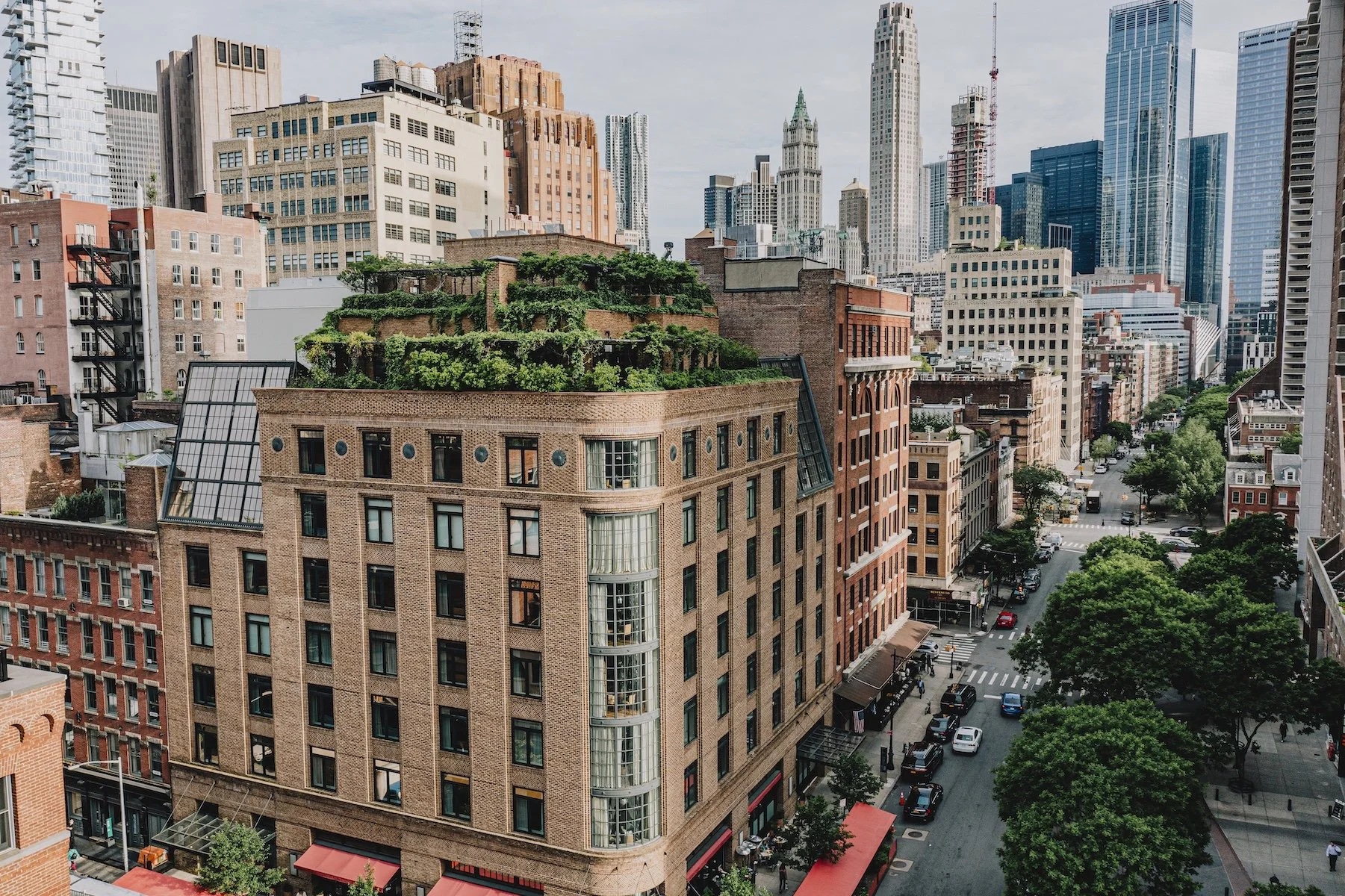
If Cobble Hill is a fortress, Tribeca is a sovereign state. In 2026 it is no longer just a neighborhood — it is a global reserve currency for real estate. While the rest of Manhattan fluctuates with interest rates and inventory cycles, Tribeca's floor remains stubbornly high because what's here is genuinely irreplaceable. The inventory is artifact-grade and the market treats it accordingly.
The 2026 story is what I'd call a Flight to Pedigree. The era of "any loft will sell" is over. Buyers at this level are hyper-focused on building history and what I'd describe as light-to-volume ratios — the relationship between ceiling height, window exposure, and raw square footage that defines whether a space feels like a true Tribeca loft or an expensive approximation of one.
The price story reflects that precision. Median sales are running $3.8M to $4.5M, but the per-square-foot variance is significant. Authentic cast-iron lofts on prime blocks — North Moore, Franklin — are hitting $2,800 and above per square foot. Newer glass towers are seeing slight compression as buyers at this level increasingly favor soul over floor-to-ceiling windows. The market is telling you something about what actually holds value here and it's worth listening to.
Velocity splits along the same line. Well-priced boutique units in buildings with fewer than ten units move in under 45 days. Large-scale mega-condos are sitting for 100 days or more as the ultra-high-net-worth buyer pivots toward more discreet addresses. If you're selling in this market, product matters more than price.
East Tribeca: The Walker-White Corridor

For years the area east of Church Street toward Broadway was dismissed as Tribeca-adjacent — too close to the courthouse energy, not quite the real thing. In 2026 that perception has not caught up to the reality.
The success of 108 Leonard — the McKim, Mead & White conversion that reset expectations for what a Tribeca building could be — combined with boutique projects like 32 Walker and 14 White has transformed this corridor into a high-design pocket that offers the same ceiling heights and architectural integrity as the prime blocks at roughly 15 percent less per square foot. It's quieter than the hub near Greenwich Street, less trafficked by the people who come to Tribeca to look at Tribeca, and increasingly where the buyers who actually know the neighborhood are looking first.


The Co-op Shift: 2026 Changes Everything
For decades Brooklyn Heights co-op boards were effectively the great wall of Brooklyn real estate. Demanding post-closing liquidity requirements, strict debt-to-income ratios, and — most frustratingly — no obligation to communicate with applicants on any timeline. Buyers with clean financials would submit packages and wait months without a word.
That dynamic has shifted materially in 2026. New co-op application timeline regulations going into full effect this year mean boards can no longer leave buyers in extended silence. The liquidity and financial requirements remain serious — expect boards to want two years of post-closing liquidity and DTI ratios around 25% — but the process now has structure and accountability that it never had before.
The result is a roughly 10% uptick in co-op transactions. The "board fear factor" that kept qualified buyers away from the Heights for years has been replaced by a regulated process. If your financials are clean, 2026 is genuinely the most accessible the Heights co-op market has ever been. That's not a small thing and it's not widely understood yet.
Who's Moving Here
The 2026 Tribeca buyer is what I'd call the Quiet Multinational — ultra-high-net-worth buyers who are treating Manhattan real estate as portfolio stabilization rather than lifestyle purchase. They're obsessed with privacy in a way that shapes every decision they make, which is why buildings with porte-cochère entrances like 443 Greenwich and 70 Vestry have 2026 waiting lists even for rentals. If you can move from your car to your living room without touching a sidewalk, the premium is 30 percent and people pay it without discussion.
There's also a serious contingent of buyers driven entirely by the school district story — which is more nuanced than most agents realize.
The Cast-Iron Scarcity and the PS 150 Story
On the loft inventory: unlike DUMBO, which has a significant number of new builds styled to look like converted lofts, Tribeca's 19th-century cast-iron inventory is genuinely finite. There is no more of it being made. In 2026 buyers who can't source a true 4,000-square-foot loft are combining units in smaller co-ops — buying a neighbor's apartment to create the floor-through feel that the open market can no longer supply. If you own an original loft with timber beams and 12-foot joists, you're not selling it. You're borrowing against it.
On PS 150: this is the detail most agents get wrong. PS 150 relocated from its historic Independence Plaza home to a new facility at 28-42 Trinity Place — technically in the Financial District — in 2022. What hasn't changed is its District 2 designation and its standing as a National Blue Ribbon School, a recognition it received in late 2024. In 2026 Tribeca families are still buying specifically to access PS 150 and PS 234 through District 2. The school's physical move south hasn't hurt values — it has expanded the desirable zone toward the Financial District border in a way that's quietly benefiting buyers who look at that corridor and see opportunity.
Ground-Level Intel
The Congestion Pricing Effect — one year into Manhattan's congestion pricing implementation the picture for Tribeca specifically is interesting. Canal Street traffic speeds are up significantly, making the North Tribeca blocks measurably more livable than they were in 2024. The trade-off: if you live on Watts or Desbrosses, you're at the toll border, and your Uber costs to anywhere north of 60th Street have increased accordingly. Know which side of the line you're on before you sign.
The 101 Franklin Construction Cloud — the office-to-residential conversion at 101 Franklin is a 16-story project that won't be done until at least 2027. If you're looking at units on the south side of Franklin or the north side of Leonard, your quiet loft will be a construction site for the foreseeable future. Ask about it directly. The noise monitoring data is public and worth reviewing before you commit.
The Transit Reality — the Canal Street A/C/E is currently undergoing heavy de-interlining repairs and late-night service is unreliable in 2026. The Franklin Street 1 train is the neighborhood's more dependable lifeline right now. If your commute depends on the A/C/E, factor that into how you think about the current moment — it won't be this way forever but it's the reality today.
The 443 Greenwich / 70 Vestry Privacy Premium — if a client asks why these buildings command what they command, the answer is the porte-cochère. The ability to move from a private vehicle directly into a building without exposure to the street is not an amenity at this level — it's a requirement for a specific kind of buyer. Understanding that distinction is the difference between showing the right product and wasting everyone's time.
The Unit Combination Market — if you're a buyer who can't find the floor-through loft you want on the open market, ask me about combination opportunities in smaller co-ops before you give up on Tribeca. This is an active and growing part of the market that never hits public listings. It requires relationships and timing rather than a StreetEasy alert.
The Real Dining Hierarchy — Bubby's is the institution everyone knows. L'Abeille à Côté is where the neighborhood actually conducts business in 2026. If you want to understand who's really buying the $10M penthouses, sit there on a Tuesday night and pay attention. It's also just excellent.


What I'm Seeing on the Ground
Tribeca rewards buyers who understand what they're actually buying — and the gap between an agent who knows this market and one who's just learned the street names is significant at these price points. The cast-iron scarcity story, the school district nuance, the congestion pricing effect — none of it shows up in a listing description. If you're serious about Tribeca I want to have that conversation before you start touring, not after you've made assumptions that cost you.
Thinking about Tribeca? Let's talk.
I know this neighborhood and I'll give you a straight read on whether it fits what you're looking for — no pitch, no pressure.