Cobble Hill
Brooklyn's permanent sweet spot — and its hardest market to crack.
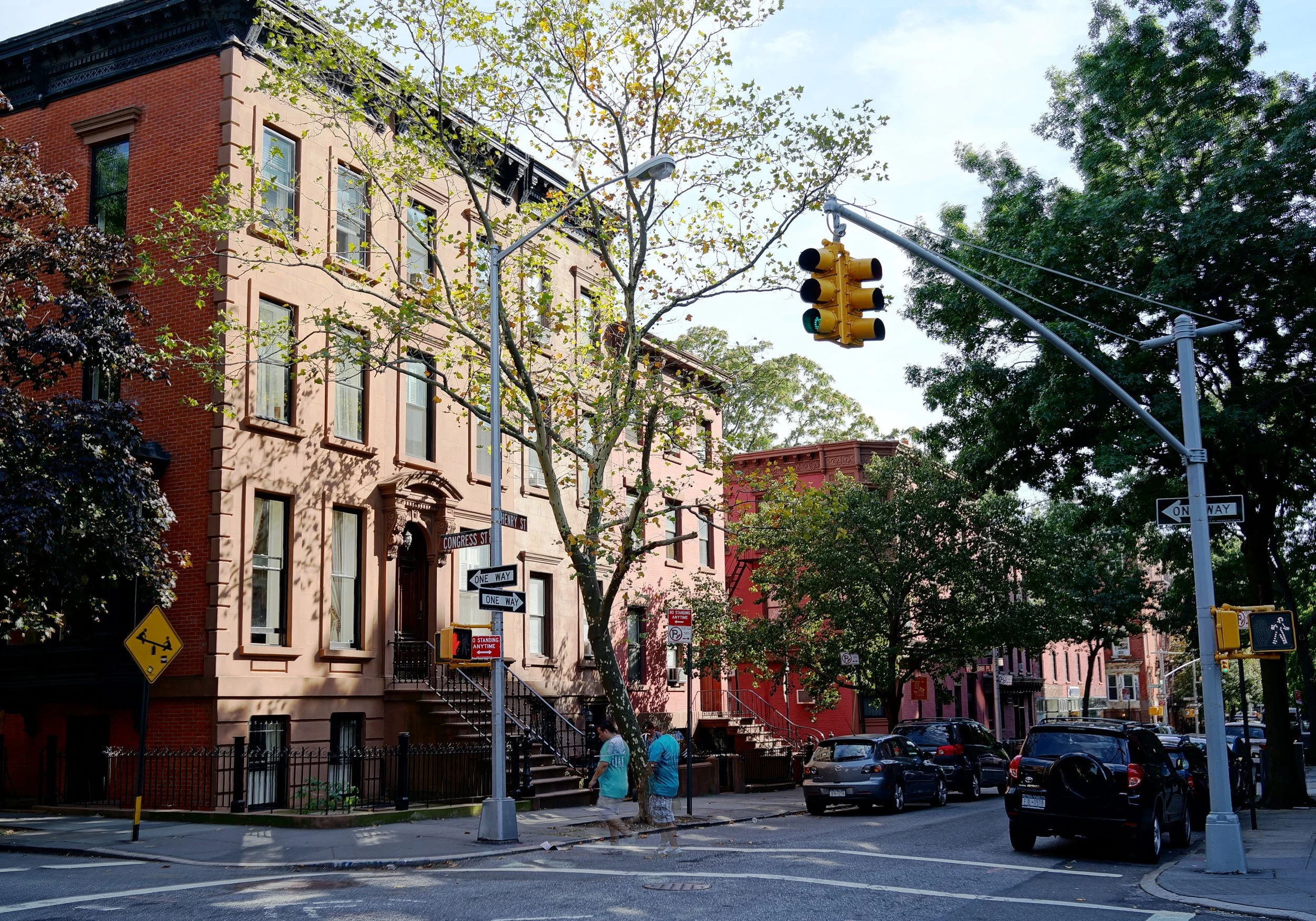

The Market Right Now
There's a line I use when clients ask me about Cobble Hill: once people get a brownstone here, they only leave in a casket. That's not hyperbole — it's the supply story. Cobble Hill in 2026 is operating as a full fortress market. While other parts of Brooklyn have seen inventory bumps from the Gowanus rezoning spillover, Cobble Hill's supply is near zero and shows no signs of changing.
The price story reflects that reality. Townhouses are pushing $4.8M at median, and starter two-bedroom condos are running $1.9M to $2.2M. This is not a neighborhood where you find deals — it's a neighborhood where you find value, and those are different things.
The market moves in two distinct speeds. The prime blocks — Strong Place, Cheever Place, the residential streets that define the neighborhood's character — are going into contract in under 12 days on turnkey product. Anything tagged as a renovator's special is sitting for 60 days or more, because the cost of labor in Brooklyn in 2026 is still a serious deterrent for everyone except developers with scale. If you're buying a project here, go in with a realistic budget and a contractor you already trust.
The other major 2026 story is the LICH effect. The redevelopment of the former Long Island College Hospital campus has reached its residential maturity, and buildings like Polhemus and The Arches have created a new West Cobble Hill luxury tier that simply didn't exist a decade ago. This is new inventory in a neighborhood that almost never has any — and it's reshaping the western edge of the market in real time.
The Hicks Trench: The 2026 Value Play

Most buyers flee when they see the BQE. The smart money in 2026 is doing the opposite.
The Hicks Street corridor between Atlantic Avenue and Kane Street is currently priced roughly 15 to 20 percent below Clinton and Court Street on a per-square-foot basis — entirely because of proximity to the BQE trench and the associated noise. But the 2026 proposal for Greenway Caps along this corridor, designed to mitigate that noise, changes the long-term math significantly. You're buying Cobble Hill bones at Columbia Street Waterfront prices with a noise mitigation upside that isn't priced in yet.
For buyers with a five-plus year horizon who can tolerate some current ambient noise, this is the most interesting value play in the neighborhood right now. It won't stay this way once the Greenway Cap timeline gets more concrete.


Who's Moving Here
The Cobble Hill buyer in 2026 is what I'd call the Post-Tech Professional — someone who has built something, exited something, or reached a point in their career where the neighborhood they live in needs to match the life they've built. They want to walk their dog to Books Are Magic without being bothered. They need the 4/5 at Borough Hall for the two days a week they're at a desk in lower Manhattan, and they spend the rest of the week at Poppy's or Joe Coffee. Cobble Hill has the highest concentration of white-collar and creative overlap in the borough, and the neighborhood's scale — quiet, walkable, human-sized — is exactly what that combination of people is looking for.
Ground-Level Intel
The Bergen Street Ghost — everyone uses the Bergen Street F/G station. What most people don't know is that the abandoned lower level of that station creates subtle but real vibration issues for buildings directly above it. If you're looking at a ground-floor unit on Smith Street near Bergen, check for subway hum during the morning rush before you make any decisions. It's one of those things you can't unfeel once you notice it.
The Arches Tax Trajectory Warning — 401 Hicks is an iconic church conversion and worth considering seriously, but here's what the listing won't tell you: J-51 tax abatements on 2000s-era conversions like this one are hitting their expiration cliffs in the mid-2020s. What looks like a low carrying cost today can look very different by 2028. Always have your attorney check the full tax trajectory before you sign — it's a standard ask and any good deal should survive the scrutiny.
The LICH Construction Cloud — while the LICH redevelopment is finished on the sales side, active construction at 350 Hicks and 91 Pacific is still ongoing in 2026. If you're buying on the west side of the neighborhood, ask about the Alternative Noise Mitigation Plan filings for nearby sites. These sites are required to have noise monitors and that data is public — use it to understand what you're moving next to and, if relevant, as a negotiating point.
The Court Street Choke Point — the city's ongoing Court Street redesign for bike lanes and outdoor dining has created a delivery truck double-parking situation that isn't going away anytime soon. If your bedroom faces Court Street, the 5am backup beeps from the Sysco trucks will become your alarm clock. It's a minor quality of life detail that becomes less minor when you're living it every morning.
The Parking Hunger Games — Cobble Hill has some of the narrowest streets in Brooklyn. If you live on Congress or Amity, plan on not finding a spot after 4pm. The local workaround is the parking garage at the NYU Langone site — expensive, but the only reliable option if you own a car here and want to maintain your sanity. Factor the cost into your monthly budget before you decide the neighborhood works for you.
The Borough Hall 4/5 Advantage — Cobble Hill sits in a commuter sweet spot that doesn't get enough credit. The 4/5 express at Borough Hall puts you in Midtown in under 20 minutes and lower Manhattan in under 10. For the buyer who needs Manhattan access without Manhattan prices, this transit reality is a significant part of what justifies the Cobble Hill premium over neighborhoods further into Brooklyn.


What I'm Seeing on the Ground
Cobble Hill is a neighborhood where preparation is everything and timing is everything else. The right product moves before most buyers have finished their coffee. If you're serious about this market — buying, renting, or just understanding whether it makes sense for your situation — the conversation I want to have is before you start touring, not after you've missed three things that were right for you.
Thinking about Cobble Hill? Let's talk.
I know this neighborhood and I'll give you a straight read on whether it fits what you're looking for — no pitch, no pressure.