Clinton Hill
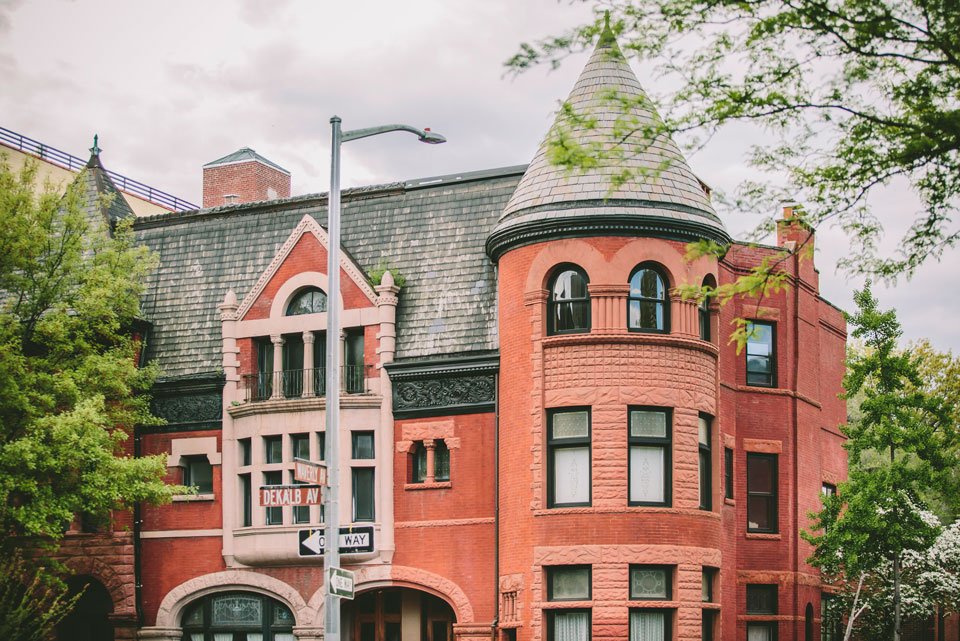
Brooklyn's best-kept secret that everyone is starting to figure out.

The Market Right Now
Clinton Hill spent years being described as the affordable alternative to Fort Greene. In 2026 that gap has nearly evaporated. Median sale prices have climbed to $1.25M and unlike markets that are cooling, Clinton Hill is locking in. People who move here tend to stay for a decade, not two years — which means inventory stays tight and demand stays consistent.
For buyers, the competition is fiercest along the Classon Avenue corridor. Anything tagged as a pre-war loft or a landmarked brownstone is seeing multiple offers within the first week. Converted buildings with real industrial character — think 12-foot ceilings, original hardwood, exposed brick — are in a category of their own because there simply isn't more of it being made.
For renters, this is a quality-over-quantity market. Renters here are consistently choosing character over convenience, willing to pay $4,200 or more for a two-bedroom in a brick-and-beam building rather than accept a glass-and-steel tower in Downtown Brooklyn at a similar price point. The building matters as much as the unit.
The Wallabout Wedge: The Pocket Worth Knowing

The northern edge of Clinton Hill — the stretch between Myrtle and Flushing along the Navy Yard border — used to get dismissed as too far from the G train. That calculus has shifted significantly.
The Brooklyn Navy Yard is no longer just an industrial campus. With Wegmans, Russ & Daughters, and an expanding film and media studio presence, it's become one of the borough's most active employment and creative hubs. For people living in the Wallabout pocket, the walk north to work is now as common as the commute south to the subway. Buildings like 275 Park Avenue — the former Tootsie Roll Factory, converted into true lofts with 12-foot ceilings and original hardwood floors, sitting directly on the Brooklyn Greenway — represent exactly what this pocket offers: authentic industrial character at a price point that still reflects its under-the-radar status.


Who's Moving Here
The Clinton Hill resident in 2026 is what I'd call the Established Creative — someone who's deeply invested in the idea of a real neighborhood. Pratt Institute's presence gives this area a genuine arts and design gravity, and the people drawn here tend to prioritize community feel and cultural depth over proximity to a specific subway line.
There's also a strong contingent of people who want the kind of block where you actually know your neighbors — without sacrificing access to serious dining, independent retail, and walkable daily life. Locanda Vini & Olii on Gates Avenue has been a neighborhood anchor for years for exactly this reason. Clinton Hill delivers that combination in a way that's increasingly hard to find in Brooklyn.
Ground-Level Intel
The Transit Reality — and the Workaround — if you're in the Wallabout pocket near 275 Park, the Clinton-Washington G stop is a real walk. What I tell clients: the B54, B57, and B62 buses connect you efficiently to the A/C, F, and the Navy Yard Ferry. Better yet, Clinton Hill is arguably the e-bike capital of Brooklyn. Once you have one, the transit conversation changes entirely — DUMBO, the Navy Yard, and the Ferry are all under ten minutes.
The Navy Yard Ferry — the most underused commute in the borough. Quiet, reliable, and it drops you in Manhattan without the chaos of Atlantic Avenue. For anyone working in lower Manhattan or the far West Side, this changes the math on the neighborhood entirely.
275 Park and the Tootsie Roll History — when I show this building I always mention it was the original Tootsie Roll factory. The 12-foot ceilings and original hardwood aren't design decisions — they're what's left of a real industrial past. Residents mention it at dinner parties for years. It's the kind of building history that a glass tower simply cannot manufacture.
The Pratt Sculpture Garden — most people default to Fort Greene Park. Locals know that the Pratt Institute campus is open to the public and houses one of the largest private outdoor sculpture gardens in the country. Quieter than the park, genuinely beautiful, and almost never crowded. If you want a peaceful walk without the Saturday farmers market energy, this is it.
Mekelburg's — when a client asks about groceries I don't just say Wegmans. I tell them about Mekelburg's on Grand Avenue — a craft beer bar and specialty grocer tucked into the basement of a residential building. If you don't already know it's there you'd walk right past it. That's the point.
Christopher Wallace Way — St. James Place carries the street sign for Christopher Wallace Way. For a certain kind of buyer, knowing they live in the neighborhood that produced Biggie Smalls adds a layer of Brooklyn authenticity that Williamsburg has largely stopped being able to claim. It's a cultural landmark that matters to people who care about where they actually are.


What I'm Seeing on the Ground
Clinton Hill is at an inflection point. The gap with Fort Greene is closing and the Navy Yard's continued growth means the Wallabout pocket specifically is still in the early innings of what it's going to become. Buyers who move here now are making a bet that's already starting to pay off for the people who made it two or three years ago. If you want to understand whether this neighborhood fits your situation I'd rather show you the blocks than explain them — the difference is significant.
Thinking about Clinton Hill? Let's talk.
I know this neighborhood and I'll give you a straight read on whether it fits what you're looking for — no pitch, no pressure.